Skip to content

Gold extraction that respects the earth beneath it

Our eco-friendly gold ore leaching agent delivers industry-leading extraction rates — without cyanide. A drop-in replacement for sodium cyanide that works with your existing equipment, process, and infrastructure.

Countries supplied
40+
Active ingredient
≥ 95%
Certification
ISO 9001:2015 & CE
Gold ore with leached gold highlights

Why gold ore leaching matters — and why the chemistry must change

Cyanide leaching has underpinned gold extraction for over a century. But the regulatory environment, community expectations, and the economics of safer alternatives have reached a tipping point. The question is no longer whether to switch — it's how quickly operations can do it.

Groundwater protected from contamination

Cyanide carries real, rising risk

Sodium cyanide is acutely toxic at very low concentrations. Spills contaminate groundwater for years, harm aquatic ecosystems, and expose workers to life-threatening risk. Regulators across Africa, Asia, and Europe are tightening controls, raising the cost and complexity of cyanide-based operations every year.
Small and mid-scale mines are underserved

Artisanal and small-scale miners often lack the safety infrastructure, storage facilities, and regulatory permits to handle hazardous chemicals. An effective, low-toxicity leaching agent removes these barriers entirely — making compliant, efficient gold recovery accessible to a much wider range of operations.

Every tonne of ore has value worth recovering

Eco-friendly leaching agents are now proven across heap leaching, pool leaching, and carbon slurry (CIL/CIP) processes, on gold-bearing quartz veins, oxide ores, sulfide concentrates, cyanide tailings, and mixed ores. Recovery rates that match or exceed cyanide mean there's no technical reason to accept the old risks.

ESG pressure is accelerating change

Mining companies are under growing pressure from investors, lenders, and communities to demonstrate Environmental, Social, and Governance accountability. Switching to a non-toxic, biodegradable leaching agent is one of the most direct and demonstrable improvements an operation can make to its ESG profile.

Built for performance. Designed for the planet.

Our leaching agent is formulated from sodium oxide, nitrogen, iron, sulfur, ammonium, calcium, and chloride compounds. It achieves gold dissolution through a fundamentally safer chemical pathway, and its breakdown products pose no lasting environmental hazard.

Closed-loop water recycling

Cyanide-free formulation

Contains no sodium cyanide or derivatives. Dramatically reduces acute toxicity risk to workers, surrounding communities, and local water systems — and removes the regulatory burden of cyanide storage and handling.

Biodegradable — no residual toxicity

Unlike cyanide, which persists in soil and water for extended periods, our agent breaks down without leaving residual toxic compounds. Tailings and treated liquids do not require the same long-term containment as cyanide-process waste.

Closed-loop water use

Return water from the leaching cycle retains residual reagent value and can be recycled back into production after replenishment, minimising freshwater draw, effluent discharge volume, and ongoing reagent cost.

Treatable tailings

Leached tailings can be washed with clean water or lime water and treated with bleaching powder, allowing sites to meet environmental standards. There is no need for specialised cyanide destruction infrastructure.

Reduced effluent treatment cost

Because the agent and its by-products are low-toxicity, wastewater treatment is far simpler and less costly than for cyanide-bearing effluent. This translates directly to lower operating expenditure across the full leaching cycle.

Non-hazardous logistics

Non-flammable, non-explosive, non-oxidising, and non-radioactive. Classified as ordinary cargo — ships by road, rail, sea, and air with no dangerous goods premiums, permits, or specialist handling required.

Ten reasons operators choose this agent

Safety and sustainability alone are not enough. This agent was designed to outperform on every operational metric that matters to a gold mining operation — from recovery rate to cycle time to cost per ounce.

  1. Drop-in process compatibility

    Works with existing cyanidation equipment and process lines without modification. No need to change tanks, carbon circuits, or monitoring instruments — switch the reagent, keep everything else.

  2. High gold recovery rate

    Leaching results match or exceed sodium cyanide across oxidised, sulfide, and mixed ore types. The agent effectively solubilises gold ions across the full range of typical ore grades and compositions.

  3. Shorter leaching cycle

    Faster reaction kinetics reduce the time ore spends in the leach circuit. For heap and pool operations, this means quicker pad turnaround; for CIL/CIP, it means shorter retention time per tank.

  4. Interference reduction

    Demonstrated ability to reduce the inhibiting effects of harmful impurities — particularly arsenic and sulfur compounds — that commonly suppress gold dissolution in complex or refractory ore types.

  5. Selective carbon adsorption

    Activated carbon adsorbs gold selectively from the leach solution, including when copper is present. This separation behaviour is a direct advantage in polymetallic ores where copper and gold occur together.

  6. Wide operating temperature range

    Performs effectively across a temperature range of 10°C to 35°C, making it suitable for operations in tropical, sub-tropical, and high-altitude environments without process heating requirements.

  7. Precision dosing, low consumption

    Dosage as low as 100 g per tonne of ore for well-characterised ores; up to 1,500 g/t for complex or high-grade material. Consumption calibrated by ore properties means no wasted reagent and predictable monthly costs.

  8. Return liquids are reusable

    Both pregnant solution and barren solution from the leaching circuit can be reused after reagent replenishment. This closed-loop approach materially reduces total reagent consumption per ounce of gold produced.

  9. Lower total operating cost

    Savings accumulate across purchasing, transport, storage, safety infrastructure, wastewater treatment, and regulatory compliance. In many operations the total cost of ownership is measurably lower than an equivalent cyanide-based circuit.

  10. Scalable from small to large operations

    Suitable for artisanal and small-scale operations running single pool leach setups through to large heap leaching projects processing hundreds of thousands of tonnes per year. The process scales linearly.

From ore to gold — a clear five-step process

The agent is applied identically to the cyanide process it replaces. Whether you run heap leaching, pool leaching, or a CIL/CIP carbon slurry circuit, the steps are the same — with none of the hazardous chemical handling.

Heap leaching pad with spray irrigation and carbon columns
  1. pH adjustment

    Lime, caustic soda, or another alkali raises ore pile or pulp pH to 10–12. The slightly alkaline environment is required for the agent to activate and dissolve gold ions effectively.

  2. Solution preparation

    Dissolve the agent in clean water to 0.03–0.1% for heap/pool leaching, or prepare a 10–15% solution for direct addition to CIL/CIP stirring tanks. The agent dissolves fully at ambient temperature.

  3. Leaching application

    For heap and pool leaching, spray or flood-irrigate the ore. For carbon slurry, add the prepared solution or solid directly to the agitation tank. Optimal results above 10°C ambient temperature.

  4. Concentration monitoring

    Measure reagent concentration in the solution at regular intervals using the test method supplied with the product. Top up promptly when concentration drops to maintain peak gold dissolution.

  5. Recovery & recycle

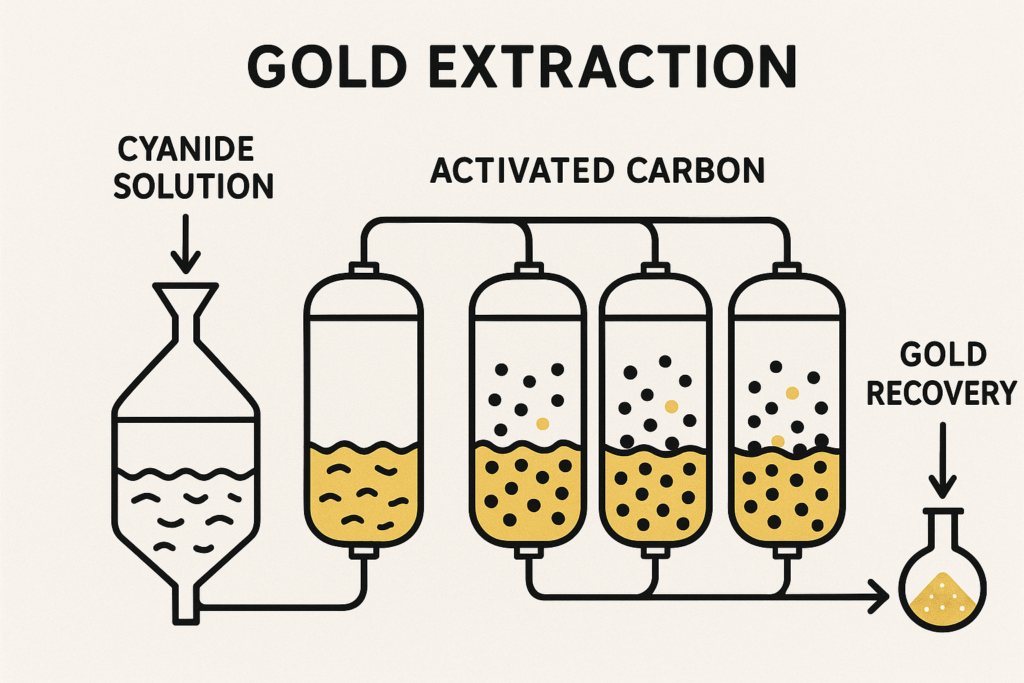
    Recover gold via activated carbon adsorption (preferred) or zinc replacement. Return water is recycled after reagent replenishment. Wash tailings with clean or lime water; treat with bleaching powder if required.

Our agent versus sodium cyanide

Real-world leaching tests across multiple ore types in Tanzania, Sudan, Egypt, and Southeast Asia consistently show that eco-friendly leaching agents match or exceed cyanide performance — with a fundamentally better safety and compliance profile.

Criterion Goldwen eco-friendly agent Sodium cyanide (NaCN)
Toxicity classification ✓ Low-toxicity, ordinary chemical ✗ Acutely toxic, hazardous substance
Biodegradability ✓ Biodegrades — no residual toxicity ✗ Persistent in soil and water
Transport classification ✓ Ordinary cargo — road, rail, sea, air ✗ Dangerous goods — restricted, costly
Storage requirements ✓ Sealed, cool, dry — standard warehouse ✗ Specialist secure storage with gas detection
Regulatory complexity ✓ Low — no hazardous chemical permits ✗ High — permits, end-user certs, audits
Worker safety risk ✓ Minimal — no HCN off-gassing risk ✗ Significant — HCN gas lethal at low ppm
Gold leaching efficiency ✓ Matches or exceeds NaCN across most ores Reference standard
Leaching cycle duration ✓ Faster — shorter pad/tank retention time Baseline
Arsenic/sulfur interference ✓ Reduced — more stable performance ✗ Sensitive to complex ore impurities
Equipment changes needed ✓ None — direct replacement in existing circuit N/A — existing baseline
Effluent treatment ✓ Simple wash / bleaching powder treatment ✗ Dedicated cyanide destruction circuit
ESG / investor compliance ✓ Aligns with green mining & ESG frameworks ✗ Increasing lender and investor scrutiny
Active ingredient ≥ 95% 98%+ (NaCN)
Packaging 25 kg moisture-proof bags, 40 bags/pallet Specialist sealed drums or briquette bags

Product specifications

Full MSDS documentation is included with every order. Contact our technical team for any process questions before or during your production run.

Ask the technical team
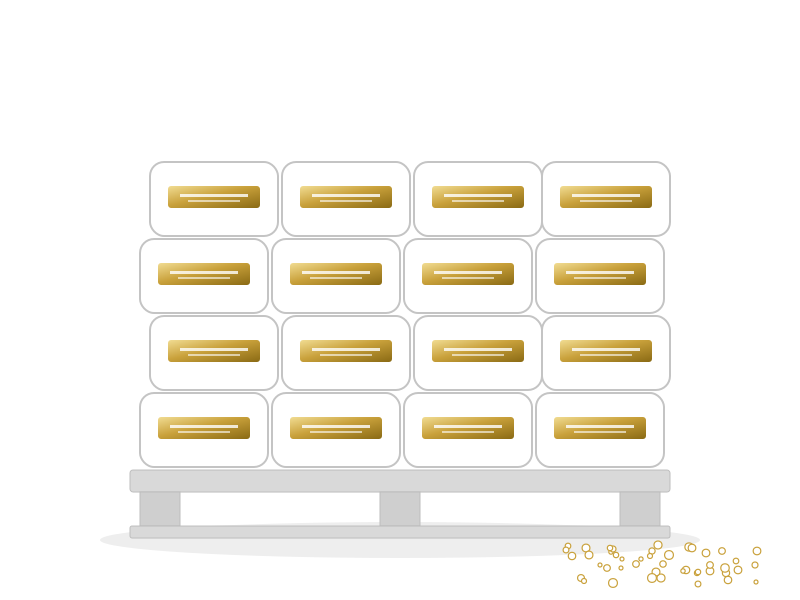
Pallet of 25 kg leaching agent bags
Product properties
Form White powder or granules (easily soluble)
Active ingredient ≥ 95%
pH (1% solution) 9.0 – 11.0
Main ingredients Sodium oxide, nitrogen, iron, sulfur, ammonium, calcium, chloride
Net weight per bag 25 kg (± 0.2 kg)
Pallet unit 40 bags = 1 tonne per pallet
OEM / custom labelling Supported
MSDS Included with every order
Flammability Non-flammable
Explosiveness Non-explosive
Oxidising risk Non-oxidising
Radioactivity Non-radioactive
Transport modes Road, rail, sea, air, courier
Process parameters
Working pH 10 – 12 (adjusted with lime or caustic soda)
Optimal temperature 10°C – 35°C (leaching active above 10°C)
Agent dosage 100 – 1,500 g per tonne of ore
Heap / pool spray concentration 0.03 – 0.1% (mass)
CIL/CIP slurry concentration 0.03 – 0.1% maintained in leach circuit
CIL/CIP dosing solution 10 – 15% solution, or direct solid addition
Leaching processes Heap leaching, pool leaching, CIL, CIP
Gold recovery method Activated carbon adsorption (preferred), zinc replacement
Silver ores Compatible
Sulfide ores Compatible
Cyanide tailings Compatible
Cyanide circuit compatibility Can be used alongside cyanide circuits
Return water reuse Supported after reagent replenishment

Applicable ore types

  • Gold-bearing quartz vein
  • Oxidised gold ore
  • Oxidised silver ore
  • Primary sulfide ore
  • Copper-containing polymetallic gold ore
  • Carbon-containing gold ore
  • Mixed ore (oxidised + primary)
  • Cyanide tailings
  • Gold concentrates
  • Gravity separation tailings
  • Electronic waste / gold-bearing scrap
  • Precious lean liquids
Countries served
40+
Active ingredient
≥ 95%
Quality certification
ISO 9001:2015
Product certification
CE (EU)
Production base
9,000+ m²
Our promise
Honest Partner

Common questions

These are the questions our technical team hears most often from prospective customers. If yours isn't answered here, include it in your quote request and we'll respond directly.

Do I need to change my existing equipment?

No. The agent is a direct process replacement for sodium cyanide. Your existing tanks, carbon circuits, pumps, monitoring equipment, and infrastructure all continue to be used without modification. The switch is reagent-only.

What is the leaching rate compared to cyanide?

Comparative tests on oxidised gold ores, primary sulfide ores, and mixed ores consistently show the agent matching or exceeding the gold leaching rate achieved with sodium cyanide under the same conditions. Results vary by ore type — contact us with your ore details for a closer assessment.

What process is best for my ore type?

Ore mineralogy determines the right process. Gold-bearing quartz vein and oxidised ores generally suit heap leaching, pool leaching, or CIL/CIP. Polymetallic and complex sulfide ores may benefit from pre-concentration by gravity or flotation before leaching. For visible gold, gravity equipment should be used for pre-recovery.

Can the agent work in cold climates?

Leaching is active above 10°C. At temperatures between 10°C and 35°C the agent performs at full efficiency. Operations in colder environments should account for this when scheduling leaching campaigns, or consider low-cost solution warming measures for heap pads in winter months.

How do I handle return water and tailings?

Return water — which contains residual reagent and trace gold — is recycled back into the circuit after reagent replenishment. There is no waste stream. Leached tailings are washed with clean water or lime water; bleaching powder treatment achieves environmental compliance in most jurisdictions, with no specialist cyanide destruction plant required.

What are the storage and handling requirements?

Store in a cool, dry, sealed location in standard warehouse conditions. Keep isolated from other chemicals and food products. The product absorbs moisture readily and must remain sealed until use. No specialist ventilation, gas monitoring, or hazardous materials handling certification is required.

How is the agent dosed in a CIL/CIP circuit?

Prepare a 10–15% solution in water and dose continuously into the leach circuit, or add the solid directly to the first agitation tank. Monitor concentration in the slurry at regular intervals and top up when it falls below 0.03–0.1%. Our supplied test method makes this straightforward on-site.

Is the agent compatible with activated carbon gold recovery?

Yes — and activated carbon is the preferred recovery method. The agent produces a leach solution from which activated carbon selectively adsorbs gold, including in the presence of copper. This selective behaviour is an advantage in complex polymetallic ores, simplifying downstream copper-gold separation.

Request a quote

Fill in your details and our team will respond within one business day with pricing and any technical guidance relevant to your operation.

Verify a batch

Point your camera at the QR code printed on the bag. The batch record opens automatically.